 Most viewed Most viewed |

bps-essay_45.pdfTwo Styles of Insight Meditation3866 viewsToday the practice of insight meditation has gained global popularity, yet in achieving this success it has undergone a subtle metamorphosis. Rather than being taught as an integral part of the Buddhist path, it is now often presented as a secular discipline whose fruits pertain more to life within the world than to supramundane release. Many meditators testify to the tangible benefits they have gained from the practice of insight meditation, benefits that range from enhanced job performance and better relationships to deeper calm, more compassion, and greater awareness. However, while such benefits may certainly be worthwhile in their own right, taken by themselves they are not the final goal that the Buddha himself holds up as the end point of his training. That goal, in the terminology of the texts, is the attainment of Nibbana, the destruction of all defilements here and now and deliverance from the beginningless round of rebirths.
|
|

120801-LRR-32k-Prayers-HHDL_Long_Life-English.mp3Long Life Prayer for His Holiness the Dalai Lama - English3852 viewsEnglish chanting by Ven. Sarah Thresher
|
|
miao_yun.pdfTeachings in Chinese Buddhism3850 viewsVen. Master Yin ShunThe Most Venerable Yin Shun's expertise and writings in Buddhism have been widely acknowledged by Chinese Buddhists this century. The Miao Yun Collection (Teachings in Chinese Buddhism) provides us with important information and a systematic approach to Buddhism. These teachings give us a clear insight into, and a deep understanding of Chinese Mahayana Buddhism. This book also includes a section on the position of the Chinese Tripitaka in World Buddhism.
|
|

09_tara.jpgThe 21 Taras (09)3842 viewsThe 21 Taras [Tibetan style] (Tibetan, Sgrol-ma)
It was not until the adoption of the Yogachara system, taught by Asanga in the fourth century AD, that the feminine principle began to be venerated in Mahayana Buddhism. Around the sixth century, the goddess Tara was considered as a Sakti of Avalokitesvara (sometimes as his wife).
|
|

tinsha.wavHand Bell.3818 viewsThe sound of a Temple Hand Bell.
|
|
sujivapoems.pdfWind in the Forest3802 viewsThis book is a unique collection of poems, write-ups, illustrations and photos. In Venerable Sujiva's sincere and heartfelt writings, readers may find many touching incidents related by him in his many years of teaching. They will also come to understand him, his compassion and loving-kindness as well as the Dhamma by simply flowing with his pen.
|
|
WhoSaw.pdfThe One-Who-Saw3802 viewsThere once was a happy land where the inhabitants lived a happy and harmonious life. They were kind to one another and their ways were simple. Their wants were few... An illustrated Buddhist story about the One Who Saw combines Buddhist themes into a children's book. [42 pages]
|
|
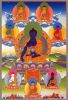
medicine_buddha.jpgMedicine Buddha Thangka3793 viewsMedicine Buddha Thangka
|
|
73_Knowledges.pdfWisdom and the Seventy-Three Kinds of Knowledge3780 viewsThe 'Seventy-Three Kinds of Knowledge' appear as a
Summary or Table of Contents (matika) in the first Treatise
on Knowledge (matika-katha) of the Canonical book Patis-
ambhida-magga (translated by Bhikkhu Nanamoli as "The
Path of Discrimination", PTS ed. 1982).
|
|
thittila.pdfEssential Themes of Buddhist Lectures3768 viewsThese talks on Buddhism given by this famous Burmese Buddhist master, Venerable Sayadaw U Thittilla in the west over the period 1938-1983. Some of the themes are: 'What is Buddhism', 'Likes and Dislikes', 'A Short History of Buddhism', 'What Kamma Is', 'The Path to Nibbana' and 'The Abhidhamma Philosophy'.
|
|
| 1212 files on 122 page(s) |
 |
|
|
28 | |
|
|
|






















 Social Bookmarks


