 Most viewed Most viewed |

07_Clearly-knowing-daily-activities.mp3(7) Clearly Knowing Daily Activities2952 viewsClearly Knowing Daily Activities requires one to have full knowledge of what one is doing as one is doing it - i.e. having present moment awareness.
|
|
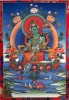
21_tara.jpgThe 21 Taras (21)2948 viewsThe 21 Taras [Tibetan style] (Tibetan, Sgrol-ma)
It was not until the adoption of the Yogachara system, taught by Asanga in the fourth century AD, that the feminine principle began to be venerated in Mahayana Buddhism. Around the sixth century, the goddess Tara was considered as a Sakti of Avalokitesvara (sometimes as his wife).
|
|

First_Discourse-Comparison_of_Versions.pdfThe Buddha's First Discourse: a Comparision of Versions2940 viewsThis is a study of the Dhammacakka-Pavattana-Sutta, officially considered the first discourse of the Buddha. The tradition acknowledges that he spoke about his teaching before the occasion of the delivery of this discourse. This study was undertaken during my Buddhist studies, which was one major of my Batchelor of Arts at the University of Queensland, completed in 2004. The study compares 17 possible versions of this discourse from four languages: Pali, Chinese, Tibetan and Sanskrit. Some interesting differences are discovered and an attempt is made to explain them. An expected core of all the discourses stands out, which shows why all major schools of Buddhism accept the Four Noble Truths as the essential teaching of the Buddha.
|
|
ctp_book_v1.pdfClearing the Path2934 viewsNOTE: Primarily the PDF CtPbookV1.pdf is made to be printed as a book. Other versions of this PDF are modified to be better viewed on screen - whilst another is already pre-printed in PDF format as a 2-up meaning that there are 2 pages per A4 Landscape oriented page to make for easier printout (on A4 paper) for personal use.
|
|

Ksitigarbha01.jpgKsitigarbha Bodhisattva012929 viewsTi Tsang P'usa: Ksitigarbha Bodhisattva
Ti Tsang P'usa is an extremely popular Bodhisattva among the Chinese and Japanese Buddhists. 'Ti Tsang', meaning 'Earth-Store' is a direct translation of the Bodhisattva's name KSITIGARBHA in Sanskrit. Among the countless Bodhisattvas in the universe, he and three others have firmly captured the hearts of the Mahayanists. These four main P'usas or Bodhisattvas are depicted in the Chinese Buddhist Pantheon and they represent four basic great qualities:
KUAN SHIH YIN as Great Compassion;
WEN SHU as Great Wisdom;
PU HSIEN as Great Love and Perfect Activity;
TI TSANG as Great Vow to help and to deliver all beings.
His greatest compassionate Vow being: "If I do not go to the hell to help the suffering beings there, who else will go? ... if the hells are not empty I will not become a Buddha. Only when all living beings have been saved, will I attain Bodhi."
|
|
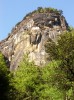
Bhutan002.jpgBhutan - Buddhist Himalayan Kingdom (11) 2929 viewsIn 2005 the Australian monk Ven S Dhammika was invited to the remote Himalayan kingdom of Bhutan and spent ten days visiting the countries monasteries, shrines and temples. We present some of the pictures he took while in this rarely visited land and hope you enjoy them.
|
|
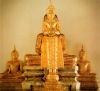
thai-buddha_06.jpg06 Thai Buddha Image2923 views06 Thai Buddha Image
|
|
nutshell.pdfBuddhism in a Nutshell2919 viewsThe Story of the Buddha; The Teachings (Dhamma) is it a philosophy? Is Buddhism a religion? Is Buddhism as Ethical system? Some salient features of Buddhism. Karma or the Law of Moral Causation. Rebirth. Dependent Arising (Paticca Samuppada). Anatta or Soul-lessness. Nibanna and The Path to Nibbana.
|
|
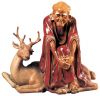
lohan01.jpgLohan: PINDOLA2919 viewsLegend has it that the first portraits of the 18 Lohans were painted by a Buddhist
monk Guan Xiu, in 891 A.D. Guan Xiu lived in Chengdu, the capital of a small
kingdom, the Former Shu, formed at the decline of the Tang Dynasty in what is
today's Sichuan Province. He was adept at the scholarly pursuits of painting,
calligraphy and poetry.
|
|
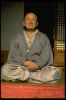
IMG0007.jpgHermit in the Korean Mountains2918 viewsSangha - Monks and Nuns in the Buddhist Community
|
|
| 1212 files on 122 page(s) |
 |
|
|
44 | |
|
|
|























 Social Bookmarks


