 Most viewed Most viewed |

02_wisdom_supports_samadhi.mp3Ajahn Maha Boowa Discourses (02)2601 views02. Wisdom Supports Samadhi
This audio selection of the discourses of Ajahn Maha Boowa, were translated into English and recorded by Ajahn Suchaat at Wat Pa Bann Taad, Thailand.
These Teachings are free gifts of Dhamma and may not be offered for sale.
|
|

Nagarjuna.pdfNÄgÄrjuna and the Philosophy of UpÄya2601 viewsThe purpose of this article is to offer a different account of Nagarjuna than is found in contemporary Western scholarship. It will not ask what it means for causality, truth, the self, or consciousness to be "empty" in a very general sense, but rather how NÄgÄrjuna's philosophy relates to the soteriological practices of Buddhism and what it means for those practices to be "empty" of inherent nature. Rather than describing NÄgÄrjuna as a metaphysician this study will situate him squarely within the early Mahayana tradition and the philosophical problem of practice that is expressed through the doctrine of “skill-in-means†(upÄya-kausalya).
|
|
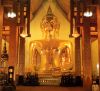
thai-buddha_09a.jpg09 Thai Buddha Image2594 views09 Thai Buddha Image
|
|
Begin_Pali_Suttas.pdfBeginnings: The Pali Suttas2594 viewsExcept where otherwise noted, all factual information in this essay is garnered from the PÄḷi Suttas and their companion-piece, the Vinaya. In these texts we find accounts of the first months following the Buddha’s awakening (Khandhaka I, MahÄvagga, Vinaya), of the final months before his decease (Sutta 16, DÄ«gha NikÄya), of the events leading up to the First and Second Councils, together with an account of those Councils (Khandhakas XI and XIi, Cullavagga, Vinaya), and, scattered through the texts, incidental information and clues about the middle period of the Buddha’s ministry. Considerable additional information is available in texts of later date, such as the Classical Commentaries.
|
|
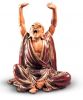
lohan10.jpgLohan: PANTHA2593 viewsLegend has it that the first portraits of the 18 Lohans were painted by a Buddhist
monk Guan Xiu, in 891 A.D. Guan Xiu lived in Chengdu, the capital of a small
kingdom, the Former Shu, formed at the decline of the Tang Dynasty in what is
today's Sichuan Province. He was adept at the scholarly pursuits of painting,
calligraphy and poetry.
|
|
02.mp3Siddhartha2589 viewsSiddhartha is an allegorical novel by Hermann Hesse which deals with the spiritual journey of an Indian man called Siddhartha during the time of the Buddha.
Siddhartha is an allegorical novel by Hermann Hesse which deals with the spiritual journey of an Indian man called Siddhartha during the time of the Buddha.
"Siddhartha" means "he who has attained his goals" or "every wish fulfilled".[1] The Buddha's name, before his renunciation, was Prince Siddhartha Gautama, later the Buddha. The main character of Siddhartha in the book is not the same person as the Buddha, who in the book goes by the name "Gotama".
|
|

Amithaba007.jpgAmithabha Buddha072588 viewsAMITABHA: Buddha of Boundless Light of the Western Paradise
|
|
Day02Metta_InfoPart_1.MP3Metta Meditation (Part 1)2586 viewsDay Two: part 1: Metta Meditation given at the 2009 10-day Vipassana Retreat at Bodhi Tree Forest Monastery, Australia.
|
|
09_Seon_Poems_web.pdfVolume 9. Seon Poems: Selected Works2586 viewsSeon Poems: Selected Works.
|
|
Buddha_in_his_words.pdfThe Buddha’s Teaching In His Own Words 2582 viewsThe present Wheel booklet contains Chapter 12 of Bhikkhu Nanmoli’s classic compilation, The Life of the Buddha according to the Pali Canon. The purpose of that book, now in print for 27 years, had been to construct a biography of the Buddha by piecing together all the relevant material scattered throughout the Vinaya and the Sutta Pitakas. Since the Buddha’s life was in many respects inseparable from his teaching, Ven. Nanamoli had included, in the middle of the book, an anthology of texts dealing with the teaching, which he entitled “The Doctrineâ€.
|
|
| 1212 files on 122 page(s) |
 |
|
|
47 | |
|
|
|





















 Social Bookmarks


