 Most viewed Most viewed |

mission-accomplished.pdfThe Mission Accomplished2472 viewsA historical analysis of the Mahaparinibbana Sutta of the Digha Nikaya of the Pali Canon. The Mission Accomplished is undoubtedly an eye opening contribution to Buddhist analytical Pali studies. In this analytical and critical work Ven. Dr. Pategama Gnanarama enlightens us in many areas of subjects hitherto unexplored by scholars. His views on the beginnings of the Bhikkhuni Order are interesting and refreshing. They might even be provocative to traditional readers, yet be challenging to the feminists to adopt a most positive attitude to the problem. Prof. Chandima Wijebandara, University of Sri Jayawardhanapura, Sri Lanka.
|
|

01_Inspiration.mp31. Golden Chain Of Love (Songs)2471 viewsThe Buddha is the greatest role model in the history of mankind. As the Exalted One, His boundless love is in comparable to any other. He is the All-knowing One with the ability to communicate even the most complex concept in the universe into simple and easily understood phrases. Endowed with knowledge and virtue, the Buddha reminds us to against perpetrating any unwholesome deeds and encourages us to perform wholesome deeds. With firm morals, the mind can then be set free from all forms of distractions.
|
|

Bhutan004.jpgBhutan - Buddhist Himalayan Kingdom (13) 2464 viewsIn 2005 the Australian monk Ven S Dhammika was invited to the remote Himalayan kingdom of Bhutan and spent ten days visiting the countries monasteries, shrines and temples. We present some of the pictures he took while in this rarely visited land and hope you enjoy them.
|
|
BT04B.MP3Lecture 4. (b) Dependent Arising2461 viewsThe lectures explain the Dhamma from the perspective of Theravada Buddhism, the oldest continuous Buddhist school, whose scriptures, the Pali canon, give the most accurate picture of what the historical Buddha himself actually taught. The lectures are intended to be basic enough to be of value to beginners without previous study of the Dhamma, and deep and through enough to be of interest to long-term students seeking to extend and clarify their understanding.
|
|

Bhutan_17.jpgBhutan - Buddhist Himalayan Kingdom (36) 2455 viewsIn 2005 the Australian monk Ven S Dhammika was invited to the remote Himalayan kingdom of Bhutan and spent ten days visiting the countries monasteries, shrines and temples. We present some of the pictures he took while in this rarely visited land and hope you enjoy them.
|
|
samadhi_in_buddhism.pdfSamadhi in Buddhism2449 views
|
|
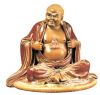
lohan09.jpgLohan: GOBAKA2446 viewsLegend has it that the first portraits of the 18 Lohans were painted by a Buddhist
monk Guan Xiu, in 891 A.D. Guan Xiu lived in Chengdu, the capital of a small
kingdom, the Former Shu, formed at the decline of the Tang Dynasty in what is
today's Sichuan Province. He was adept at the scholarly pursuits of painting,
calligraphy and poetry.
|
|
Day03Vipassana_InstructionPart_2.MP3Vipassana Instruction (Part 2)2445 viewsDay Three: part 2: Vipassana Meditation Instruction given at the 2009 10-day Vipassana Retreat at Bodhi Tree Forest Monastery, Australia.
|
|

11_tara.jpgThe 21 Taras (11)2444 viewsThe 21 Taras [Tibetan style] (Tibetan, Sgrol-ma)
It was not until the adoption of the Yogachara system, taught by Asanga in the fourth century AD, that the feminine principle began to be venerated in Mahayana Buddhism. Around the sixth century, the goddess Tara was considered as a Sakti of Avalokitesvara (sometimes as his wife).
|
|
M07_PaticcaSamuppada1.mp3Paticca Samuppada (Part 1)2434 viewsCollection of Dhamma Talks in America: Paticca Samuppada (Part 1)
(44 mins)
|
|
| 1212 files on 122 page(s) |
 |
|
|
51 | |
|
|
|






















 Social Bookmarks


