 Most viewed Most viewed |

chanmed1.pdfFundamentals of Ch'an Meditation Practice7292 viewsTing Chen, Tr. Master Lok To
The Fundamentals of (Ch'an) Meditation Practice by Ting Chen. Originally, one's own mind and nature are pure, and there is nothing to accept and nothing to refuse; there is neither existence nor nonexistence; there is only clear understanding without attachment and with no dwelling. One who wants to know the no-attachment, no-dwelling mind can find it through meditation, because it is only then that the mind does not think of right and wrong, of good and evil or of self and others.
|
|
medbudsutra.pdfSutra of the Medicine Buddha7286 viewsIn the Mahayana tradition of East Asia, particularly China, Japan, Vietnam and Tibet, Bhaishajya-guru, the Medicine Buddha, occupied a special place in the hearts of the devout. Specialising in curing diseases, both physical and mental - of which delusion is the root cause. His healing acts are but the prelude to Supreme Enlightenment for those seekers who have the good fortune to learn of his vows or merely to hear his name!
|
|
palidict.pdfPali Buddhist Dictionary [4th Edition]7268 viewsThis is an authentic dictionary of Buddhist doctrinal terms, used in the Pali Canon and its Commentaries. It provides the reader not with a mere enumeration of Pali terms and their English equivalents, but offers precise and authentic definitions and explanations of canonical and post-canonical terms and doctrines, based on the Suttas, Abhidhamma and the Commentaries.
|
|
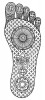
dfoot02.jpgBuddhapada027267 viewsTibetan Buddhist Art Work: Buddhapada02
|
|
abhidhaultsci.pdfThe Buddha's Abhidhamma - Ultimate Science7263 viewsThe Abhidhamma, describes in detail the natures of the ultimate realities that really exist in nature but are unknown to scientists. His method of verification is superior to scientific methods which depend on instruments. He used his divine-eye to penetrate the coverings that hide the true nature of things. He also taught others how to develop concentration and how to observe with their mind-eyes the true nature of all things and finally the four Noble Truths.
|
|

wheel-banner.jpgDharma Wheel Banner7238 viewsTibetan Buddhist Art Work: Dharma Wheel Banner
|
|
manual_zen.pdfManual of Zen Buddhism7223 viewsDaisetz Teitaro Suzuki, D.Litt., Professor of Buddhist Philosophy in the Otani University, Kyoto, was born in 1870. He is probably now the greatest living authority on Buddhist philosophy, and is certainly the greatest authority on Zen Buddhism. Dr. Suzuki writes with authority. Not only has he studied original works in Sanskrit, Pali, Chinese and Japanese, but he has an up-to-date knowledge of Western thought in German and French as well as in the English which he speaks and writes so fluently. He is, moreover, more than a scholar; he is a Buddhist. Though not a priest of any Buddhist sect, he is honoured in every temple in Japan, for his knowledge of spiritual things, as all who have sat at his feet bear witness, is direct and profound.
|
|

01-chant-01.mp301 Vandana: Pali Devotional Chanting6973 views01 Vandana: Pali Devotional Chanting
|
|
fourelements.pdfMindfulness of Breathing and the Four Elements Meditation6698 viewsVen. Pa-Auk Sayadaw
This book contains the instructions for mindfulness-of-breathing meditation, the four-elements meditation, and the subsequent detailed discernment of materiality. The last section of this book covers some of the relevant theory. Several pages have been added by the Sayadaw covering the balancing of the five controlling faculties and seven factors of enlightenment. There is also the addition of his explanation of the difference between the experience of Nibbana and the experience of life.
|
|
06_the_mahasi_method.pdf06 Introducing the Mahasi Method6593 viewsPatrick Kearney
This is an introduction to the method of insight meditation developed by Mahasi Sayadaw of Myanmar which sums up our introduction to serenity and insight by examining a particular approach to insight meditation.
|
|
| 1212 files on 122 page(s) |
 |
|
|
7 | |
|
|
|






















 Social Bookmarks


