 Most viewed Most viewed |

scrnguna.pdfA Critical Analysis of the Jhanas in Theravada Meditation6408 viewsThis work, by Ven. Henepola Gunaratana, provides an analytical study of the Jhanas, as they are an important set of meditative attainments in the contemplative discipline of Theravada Buddhism. Despite their frequent appearance in the texts, the exact role of the Jhanas in the Buddhist path has not been settled with unanimity by Theravada scholars, who are still divided over the question as to whether they are necessary for attaining Nibbana.
|
|

01_the_four_noble_truths.mp3Ajahn Maha Boowa Discourses (01)6392 viewsAjahn Maha Boowa
01. The Four Noble Truths
This audio selection of the discourses of Ajahn Maha Boowa, were translated into English and recorded by Ajahn Suchaat at Wat Pa Bann Taad, Thailand.
These Teachings are free gifts of Dhamma and may not be offered for sale.
|
|

Wisdom_Develops_Samadhi.pdfWisdom Develops Samadhi6359 viewsAnapanasati Bhavana (developing the awareness of breathing) uses the breath as the objective support of the heart and consists in knowing and mindfulness (sati) of in and out breathing. In becoming aware of breathing, one should at first fix attention on the feeling of the breath at the nose or the palate (roof of the mouth), as it suits one, because this is where the breath initially makes contact, and one may use this as a marker point for holding one's attention. Having done this until one has become skilled, and the in and out breathing becomes finer and finer, one will progressively come to know and understand the nature of the contact of in and out breathing, until it seems that the breathing is located either in the middle of the chest or the solar plexus. After this one must just fix one's attention on breathing at that place and one must no longer be concerned about fixing attention on the breathing at the tip of the nose or the palate, nor about following it in and out with awareness…
|
|
01scan.mp3Body Scan 016355 viewsBody Scan gives instructions on bringing awareness to bodily sensations. For the most part this exercise is relaxing. Occasionally practitioners initially feel uncomfortable with this exercise. If it becomes overwhelmingly distressing, merely distract or direct attention to something outside your body until you are more comfortable with the exercise at another time.
|
|

vajra02.jpgVajra026340 viewsTibetan Buddhist Art Work: Vajra02
|
|
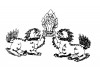
wz-snowlions.jpgSnowlions6300 viewsTibetan Buddhist Art Work: Snowlions
|
|
02_contemplating_movement.pdf02 Contemplating Movement6299 viewsPatrick Kearney
Contemplating movement. Here we explore the nature of distraction and its relationship to the fact of change. This brings us to insight meditation, and incorporating movement into the practice. We begin walking meditation, and introduce the standing posture.
|
|
ksitigarbha.pdfSutra on Ksitigarbha Bodhisatta6299 viewsSutra on the Original Vows and the Attainment of Merits of Ksitigarbha Bodhisattva, translated from Chinese into English by Ms Pitt Chin Hui, President of the Singapore Regional Centre of the World Fellowship of Buddhist.
|
|

buddha_life_05.gifThe Four Signs6286 viewsThe Four Signs
|
|
deathless.pdfMindfulness: The Path of the Deathless6259 viewsAjahn Sumedho
The aim of this book is to provide a clear instruction in and reflection on Buddhist meditation as taught by Ajahn Sumedho, a bhikkhu (monk) of the Theravadin tradition. It has been edited from talks Ajahn Sumedho has given to meditators as a practical approach to the wisdom of Buddhism. This wisdom is otherwise known as Dhamma or 'the way things are'. It is a step-by-step manual on the practice of meditation.
|
|
| 1212 files on 122 page(s) |
 |
|
|
9 | |
|
|
|






















 Social Bookmarks


