 Most viewed Most viewed |

Episode_11.flvBhuriddata Jataka: Episode 11 Series 11457 viewsJataka Buddhist Tale: History of the Naga Prince name Bhuridatta.
(Thai audio, with English and Chinese subtitles)
|
|
Episode_10.flvVidhura-Pandita Jataka: Episode 10 Series 31457 viewsVidhura-Pandita, the eloquent Sage (Thai audio, with English and Chinese subtitles)
At one time , thousands of years ago, the Bodhisatta came to earth in the person of a sage named Vidhura-Pandita. He was no ordinary man of wisdom. His life's purpose was to speak the truth, and in such a way that men would be held spellbound by his voice.
|
|
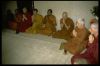
IMG0022.jpgRecitation with Ayya Khema Waldbachhof, Southern Germany1457 viewsSangha - Monks and Nuns in the Buddhist Community
|
|
Episode_04.flvVacheeKama Jataka: Episode 4 of Series 21455 views(Thai audio, with English and Chinese subtitles)
|
|
Episode_04.flvVidhura-Pandita Jataka: Episode 4 Series 31453 viewsVidhura-Pandita, the eloquent Sage
At one time , thousands of years ago, the Bodhisatta came to earth in the person of a sage named Vidhura-Pandita. He was no ordinary man of wisdom. His life's purpose was to speak the truth, and in such a way that men would be held spellbound by his voice.
|
|

File15_Burning.mp3Burning . . .1453 viewsPatrick Kearney's Vipassana Retreat Talk at Bodhi Tree Monastery (2009)
Tonight we come to Adittapariyaya Sutta (Burning …). The Buddha taught this to the former dreadlocks ascetics, presenting his analysis of the human being as constituted by six sense fields. These are the sensitivities of eye, ear, nose, tongue, body and mind, and their corresponding sense objects.
The six sense fields are the counterpart of the five aggregates, which were presented to the five companions in his first teaching. While the aggregates are predominantly mental (four of the five are mental), the sense fields are predominantly physical (five of the six are physical). While the aggregates construct a self primarily through cognition, culminating in our sense of narrative unity, the sense fields construct a self primarily through feeling, culminating in our sense of sensual unity. The teaching of the sense fields are centred on drivenness (tanha) and the dis-ease (dukkha).
|
|
2_chanting.mp3Preliminary Homage1452 viewsPreliminary Homage. The Buddhist Society of Western Australia - Chanting Book.
|
|
Episode_08.flvVidhura-Pandita Jataka: Episode 8 Series 31452 viewsVidhura-Pandita, the eloquent Sage (Thai audio, with English and Chinese subtitles)
At one time , thousands of years ago, the Bodhisatta came to earth in the person of a sage named Vidhura-Pandita. He was no ordinary man of wisdom. His life's purpose was to speak the truth, and in such a way that men would be held spellbound by his voice.
|
|
06_Inspiration.mp36. Go Forth With Valiant Heart (Songs)1452 views
|
|
04_Vesak_Track.mp34. The Bodhi Day1451 views
|
|
| 1212 files on 122 page(s) |
 |
|
|
95 | |
|
|
|






















 Social Bookmarks


